
When people think about cybersecurity, they usually picture complex software, firewalls, endpoint protection, or AI-based threat detection. But here’s a truth that IT professionals and cyber experts agree on: your people are your first line of defense — and often, your last.
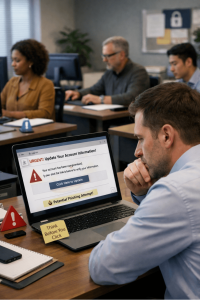
No matter how robust your tech stack is, a single click on the wrong link or a hasty approval of a fake login prompt can unravel it all. Cybercriminals understand this — that’s why modern attacks are designed to exploit human behavior rather than technical vulnerabilities.
Phishing emails, social engineering calls, MFA fatigue attacks, and even malicious QR codes are all engineered to bypass security tools by manipulating the person behind the keyboard. That’s why cybersecurity awareness is no longer optional — it’s essential.
Here's how to build a stronger human firewall in the workplace:
-
Slow down and verify
Cyberattacks often rely on catching people off guard. Whether it’s an unexpected file from a coworker or a strange login alert, always take a second to verify. That moment of hesitation could prevent a breach. -
Watch for urgency and emotion
Many phishing attacks try to create a sense of panic or pressure — “Act now or lose access,” “Your account will be locked,” etc. If it feels too urgent or emotional, it’s probably suspicious. -
Report suspicious activity
Whether it’s a strange pop-up, a weird message, or someone asking for sensitive info — tell your IT team. It’s better to report something harmless than to ignore something harmful. -
Stay informed and alert
Regularly participate in security awareness training. Know the latest tactics scammers use and what policies are in place to protect your data. -
Don’t let familiarity lower your guard
Attacks often come disguised as routine communication — invoices, HR requests, calendar invites. Never assume something is safe just because it “looks” normal.
For business leaders and IT managers:
Your security strategy should account for more than just software and infrastructure. It should invest in your people. Ongoing education, realistic phishing simulations, and clear communication channels can turn your team into a proactive security asset — not a liability.
Bottom line:
Firewalls block network traffic. People block attacks.
In the modern threat landscape, every employee plays a role in security. By fostering a culture of awareness, responsibility, and caution, you strengthen the most unpredictable layer of your cybersecurity — the human one.