
Your Password Is the Key Under the Doormat
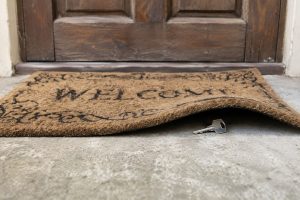 Imagine walking up to a house and lifting the welcome mat to find a spare key underneath. Convenient, predictable — and exactly where anyone with bad intentions would look first. Most businesses handle passwords the same way.
Nobody launches a company thinking password management will become part of the job. But it does, quietly, as you add more tools, more logins and more people.
The reuse problem
Most breaches don't start inside your business. They start somewhere else — a shopping site, a food delivery app, a subscription you forgot existed. That company gets hit, and suddenly your email and password are circulating in a database on the dark web.
From there, it's automated. Software takes those stolen credentials and tries them across hundreds of sites while you sleep: your email, your bank, your business apps, your cloud storage. One reused password and it's not just one door open — it's the whole building.
This is called credential stuffing, and it's effective precisely because most people reuse passwords. The attacks aren't sophisticated; they're just relentless.
The illusion of "strong enough"
Many business owners feel covered because their password has a capital letter, a number and a symbol. That might have felt secure in 2006. Today, attack tools can test billions of combinations per second.
But even a genuinely strong password is still a single point of failure. One phishing email or one vendor breach can undo it entirely. No matter how clever the password, it's one layer standing between an attacker and everything you've built.
The fix is simpler than you think
A password manager generates and stores a unique password for every account — so your team never has to remember them or reach for the same easy, recycled one.
Multi-factor authentication adds a second layer, so even an exposed password doesn't mean open access. Neither requires an IT background. Both can be set up in an afternoon.
Good security isn't about perfect habits. It's about systems that hold up even when people make honest mistakes.
Don't leave the key under the mat.