
Afraid of AI Threats? Here’s What You Really Need to Worry About
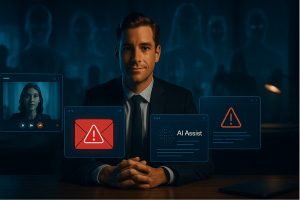 Artificial Intelligence is transforming business operations at lightning speed — but while it’s opening doors to innovation, it’s also giving cybercriminals a whole new arsenal of tricks. The unsettling truth? Hackers have access to the same AI tools you do.
Let’s pull back the curtain on three of the most unsettling AI-driven threats — and what you can do to protect your business.
1. Doppelgängers in Your Video Calls — Beware the Deepfakes
AI-generated deepfakes have become shockingly realistic, and attackers are using them to impersonate company leaders and trick employees.
In one recent case, an employee joined a Zoom meeting with what appeared to be their company’s executives — except every “participant” was a deepfake. They were persuaded to install a fake “Zoom extension,” which ultimately led to a major security breach.
How to stay safe:
Be on the lookout for odd facial movements, unnatural pauses, or strange lighting during video calls. If something feels off, verify identities through a separate channel before following any instructions.
2. Creepy Crawlies in Your Inbox — Phishing Gets an AI Upgrade
Phishing emails have come a long way from the days of obvious typos and bad grammar. AI now helps attackers craft flawless, persuasive messages that look completely legitimate.
Worse, AI translation tools make it easy for hackers to scale these scams worldwide — reaching victims in multiple languages.
Defense still works:
Multi-Factor Authentication (MFA) remains one of your best safeguards, since attackers can’t easily access your second device. And ongoing security awareness training helps your employees spot the emotional triggers — like urgency or fear — that scammers love to exploit.
3. Fake “AI Tools” — Smart on the Surface, Sinister Underneath
As AI grows in popularity, threat actors are capitalizing on hype. Many malicious websites now advertise “AI-powered” tools or cracked versions of popular apps — but they’re loaded with malware.
In one recent example, a TikTok account was promoting “free AI tools” through PowerShell commands, which turned out to be a malware distribution campaign.
Stay protected:
Before downloading any new AI tool or plugin, ask your Managed Service Provider (MSP) to vet it first. They can confirm whether it’s legitimate — saving you from a potentially expensive mistake.
Sleep Easy: We’ll Handle the AI Ghosts
AI-powered threats may sound intimidating, but with the right safeguards and training, your business can stay ahead of the curve.
From deepfakes to phishing to fake AI tools, the best defense is awareness — paired with a proactive cybersecurity strategy.
Don’t wait for the scare to become real.
Contact us today to fortify your defenses and keep your business safe from the dark side of AI.